On January 7, the People's Committee of Gia Lai province issued 2 Decisions approving the results of the invitation for interest of investors to participate in the registration for the implementation of the Van Canh 1 and Van Canh 2 Wind Power Plant projects, in which Saigon – Bac Giang Industrial Park Corporation (a subsidiary of KBC) was approved as qualified investor.
On January 7, the People's Committee of Gia Lai province issued 2 Decisions approving the results of the invitation for interest of investors to participate in the registration for the implementation of the Van Canh 1 and Van Canh 2 Wind Power Plant projects, in which Saigon – Bac Giang Industrial Park Corporation (a subsidiary of KBC) was approved as qualified investor.
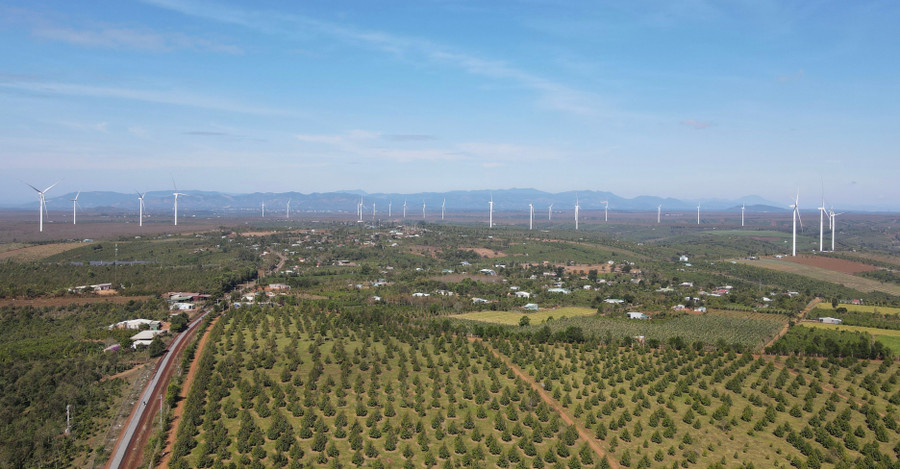
Gia Lai is a province with potential and strengths to develop wind power
The Van Canh 1 Wind Power project involves a total investment of nearly 6,905 billion VND, covering approximately 56 hectares in Canh Lien Commune, Gia Lai Province. The plant features a design capacity of 160MW with an expected annual energy output of around 502 million kWh. Meanwhile, the Van Canh 2 Wind Power project has a total investment exceeding 7,771 billion VND, spanning roughly 62 hectares across Van Canh and Canh Lien Communes, Gia Lai Province, with a design capacity of 180MW and a projected annual output of 623.2 million kWh.
Under its strategic wind energy investment, KBC is taking a pioneering role in providing clean energy solutions to enterprises within its industrial parks. Specifically, to fulfill its commitments to high-tech investors, AI data centers, smart cities, and AI high-tech parks, KBC is determined to maintain its "first-mover" advantage by guaranteeing a stable supply of renewable energy. This initiative aims toward the Net Zero goal (zero net emissions) and aligns with global sustainable development trends. This foundation will further enable the expansion into rooftop solar and utility-scale solar farms within industrial zones, effectively reducing carbon emissions and strengthening energy security in accordance with the national orientation for a green energy transition.